The Bliss Point: Why Some Foods Feel Impossible to Stop Eating
If you have ever sat on the sofa with a packet of crisps or a tub of ice cream and found yourself wondering how half of it disappeared during one episode of Strictly, you are not alone. Patients tell me this every week. People who feel very in control in their careers, parenting or fitness suddenly feel powerless around certain foods, even when they start with the intention of having just one.
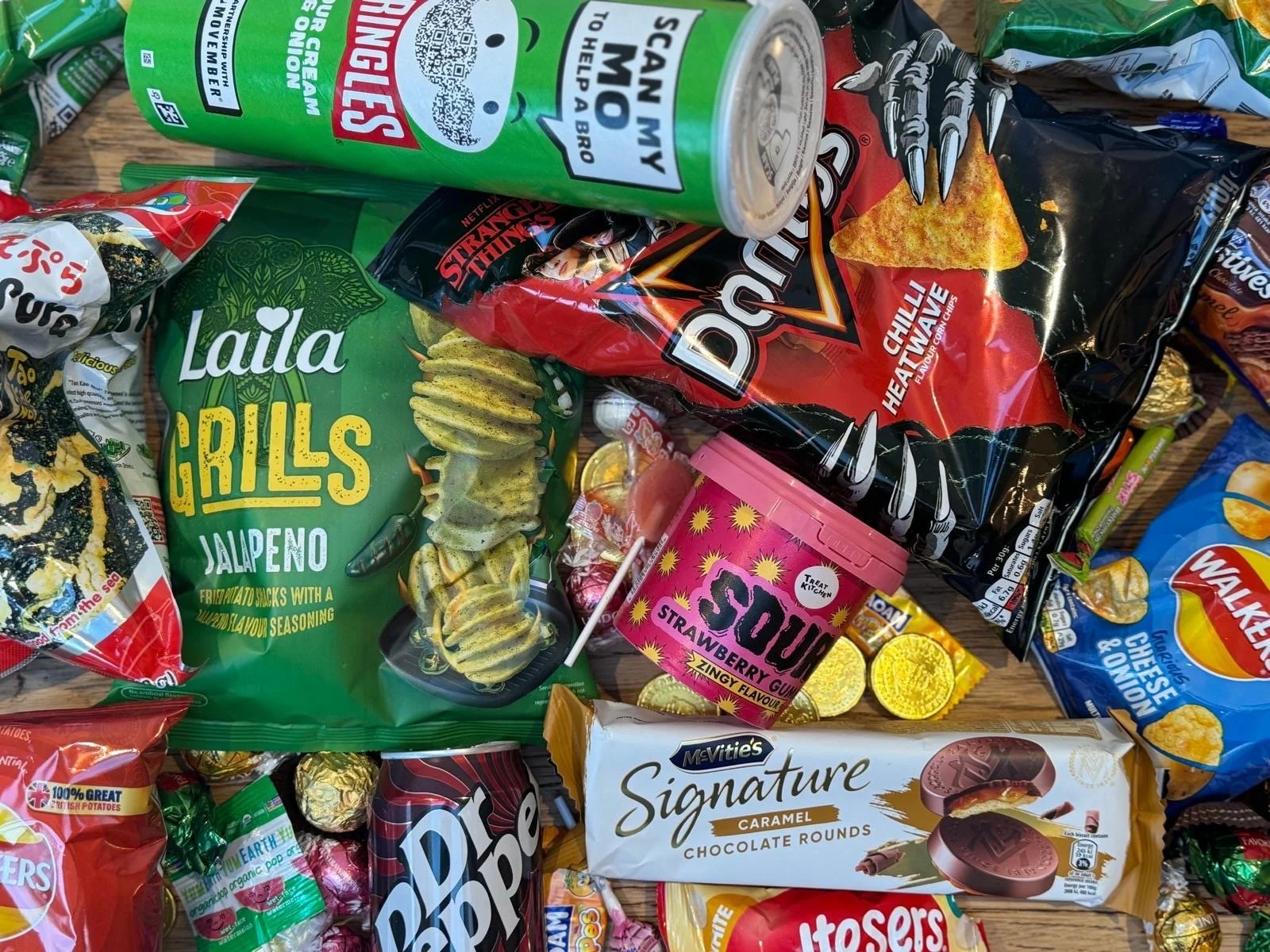
A spread of ultra-tempting supermarket treats, the kind that make “just one more” feel impossible.
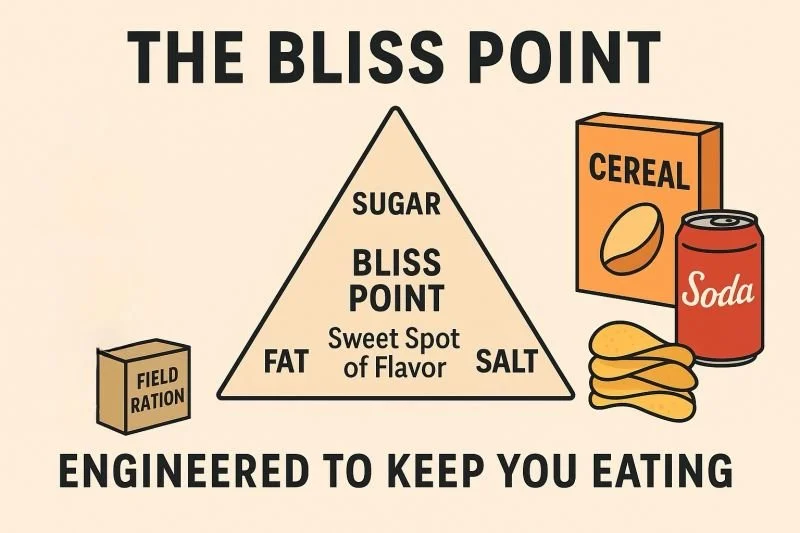
This reaction is not a question of weak willpower. It comes from something built into many supermarket products known as the bliss point. This is the precise combination of sugar, salt and fat that gives your brain a fast burst of pleasure and keeps you returning for more. Once you understand the bliss point, the whole experience becomes much easier to make sense of.
In the UK, we are surrounded by foods that are tuned to this effect. More than half of the food we take home from supermarkets is ultra-processed, and many products are engineered to taste incredible in the moment while offering very little lasting satisfaction. Add in busy lives, long work hours, family routines, and the convenience of quick snacks from the corner shop or petrol station, and it becomes clear why cravings and overeating are so common.
This blog will walk you through what the bliss point really is, how it works, where you see it in everyday shopping, and how to work with your biology rather than feeling controlled by it.
Diving deeper into the bliss point
The bliss point did not come from marketing. It came from decades of sensory science research into how humans respond to food. Scientists in the 1970s created hundreds of versions of foods with small changes in sweetness. They discovered that people consistently preferred one very specific level of sweetness. Too little and the food tasted dull. Too much and it became sickly. At the exact point in between, people found the food most enjoyable and ate significantly more.
Researchers then discovered that salt and fat behave in the same way. When the right ratio of all three is combined, the brain releases a surge of dopamine. This creates what the scientific literature calls positive reinforcement, which simply means the brain sends the message, “that felt good, do it again”.
This effect becomes especially strong when you add texture. Foods that are crunchy on the outside and soft inside, or foods that melt quickly in the mouth, deliver flavour and calories faster than the body can register fullness. Crisps are a classic example. The rapid crunch followed by a quick melt delivers salt and fat to the reward pathways very quickly, which encourages continuous eating. Ice cream does the same through rapid melting and a concentrated mix of sugar and fat.
In whole foods, taste fatigue naturally kicks in as you eat more. This is why you feel satisfied partway through a bowl of porridge or a piece of roast chicken. Bliss point foods deliberately reduce taste fatigue, so the flavour stays interesting and the reward signals stay strong.
In the UK, many everyday items fall into this category. Chocolate-covered biscuits, filled pastries, salty snacks, breakfast cereals, coated nuts, certain ready meals and fast food items are all tuned to hit this bliss point. This is why it is so easy to keep eating them even when you planned to stop.
Understanding the bliss point removes the shame. It shows that overeating certain foods is a biological response to engineered ingredients, not a personal shortcoming.
Where you will see the bliss point in UK supermarkets
Bliss point foods are not hidden. They are placed exactly where you are most likely to buy them, and they appear in predictable clusters across Tesco, Sainsbury’s, Aldi, Asda and M&S. Once you know what to look for, you start spotting the patterns immediately.
1. Sweet and salty snacks
This is the most obvious aisle, but also the most engineered. Crisps, chocolate biscuits, caramel-filled bars and flavoured popcorn often contain several forms of sugar alongside salt and processed fats. These ingredients work together to create an instant reward response, which makes it very easy to keep eating past fullness. Many brands test dozens of flavour combinations to find the one that keeps people returning to the bag. Larger sharing bags, which are now common across UK supermarkets, also make it trickier to recognise how much you have eaten.
2. Breakfast cereals
Cereals may look wholesome, especially when labelled as high fibre, multigrain or “whole wheat”. Yet a surprising number contain sugar in several forms, including glucose syrup, honey, dextrose and malt extract. Some also include fats, flavourings and salt that give them a moreish, dessert-like taste. Children’s cereals in particular are tuned to hit the bliss point, which is why they are often the hardest foods to stop eating straight from the box.
3. Ice cream and frozen desserts
This category illustrates the bliss point perfectly. Ice cream combines sugar and fat with a melt-in-the-mouth texture that bypasses natural fullness cues. Many frozen desserts also include salt to heighten sweetness and flavour. Add in mix-ins such as caramel swirls, chocolate chunks or biscuit pieces and you have multiple layers of taste and texture, each designed to keep the reward pathways activated. Even “lighter” ice creams can contain stabilisers and sweeteners that maintain this effect.
4. Fast food and hot grab-and-go items
Chips, pastries, sausage rolls, hot sandwiches and certain bakery items use the same formula of sugar, salt and fat, often with added flavours or glazes. These items are commonly placed near store entrances, coffee machines or checkouts to encourage impulse purchases. Because they are eaten warm and on the go, they reach the reward pathways quickly and tend to override fullness signals even more strongly. This is why a quick pastry from the supermarket bakery can feel disproportionately tempting compared with something like a banana or a yoghurt.
Why the bliss point matters for your holistic health
Bliss point foods affect the brain differently from whole foods. They can override your natural satiety signals, so you continue eating even when your stomach has had enough.
Over time this can lead to:
Greater calorie intake across the week
Frequent snacking
Blood sugar peaks and dips
Larger portion sizes
This is one reason diet related conditions continue to rise. More than 4 million people in the UK now live with type 2 diabetes. Excess weight is linked to several chronic conditions that place a significant burden on the NHS. Bliss point foods are not the sole cause, but they are a major contributor to modern eating patterns.
So what can we do with this information?
This is not about restricting your favourite foods. It is about making sensible adjustments that align with your biology.
Build meals around whole foods
Protein, vegetables, whole grains and healthy fats create steady energy and reduce the pull of bliss point snacks.
Eat treats after meals
Enjoy chocolate or crisps when you are not hungry. It is far easier to stop.
Choose simpler, single-flavour foods
Plain chocolate, lightly salted nuts or simple crisps are usually easier to manage than layered, ultra-engineered alternatives.
Keep the strongest bliss point foods out of sight
Studies in UK homes show that people eat more when foods are left visible in the kitchen.
Portion before sitting down
Serve yourself a small bowl rather than eating straight from the packet.
Small changes, big long term shifts
What I see in clinic is that people feel genuine relief when they learn about the bliss point. It explains a very common experience that many people interpret as a personal failure. Once you understand why these foods feel so compelling, it becomes far easier to navigate them.
Small changes can improve:
Cravings
Hunger control
Energy stability
Blood sugar balance
Weight management
Perfection is not necessary. Awareness and a handful of supportive habits can make a significant difference.
Your kitchen and your food environment have far more influence on metabolic health than willpower ever will. Once you recognise the bliss point, you can enjoy food without feeling caught by it.