The Therapeutic Power of the Purr (Why Cats & Other Animals Help Us Feel Calm)
Most of us who live with pets already know how soothing their presence can be. A warm lap, a familiar weight at your feet and the gentle rhythm of an animal settling beside you can instantly take the edge off a stressful day. Researchers have been studying this effect for many years and the findings are remarkably consistent. Spending time with pets can reduce stress, lower heart rate and help us feel more centred.
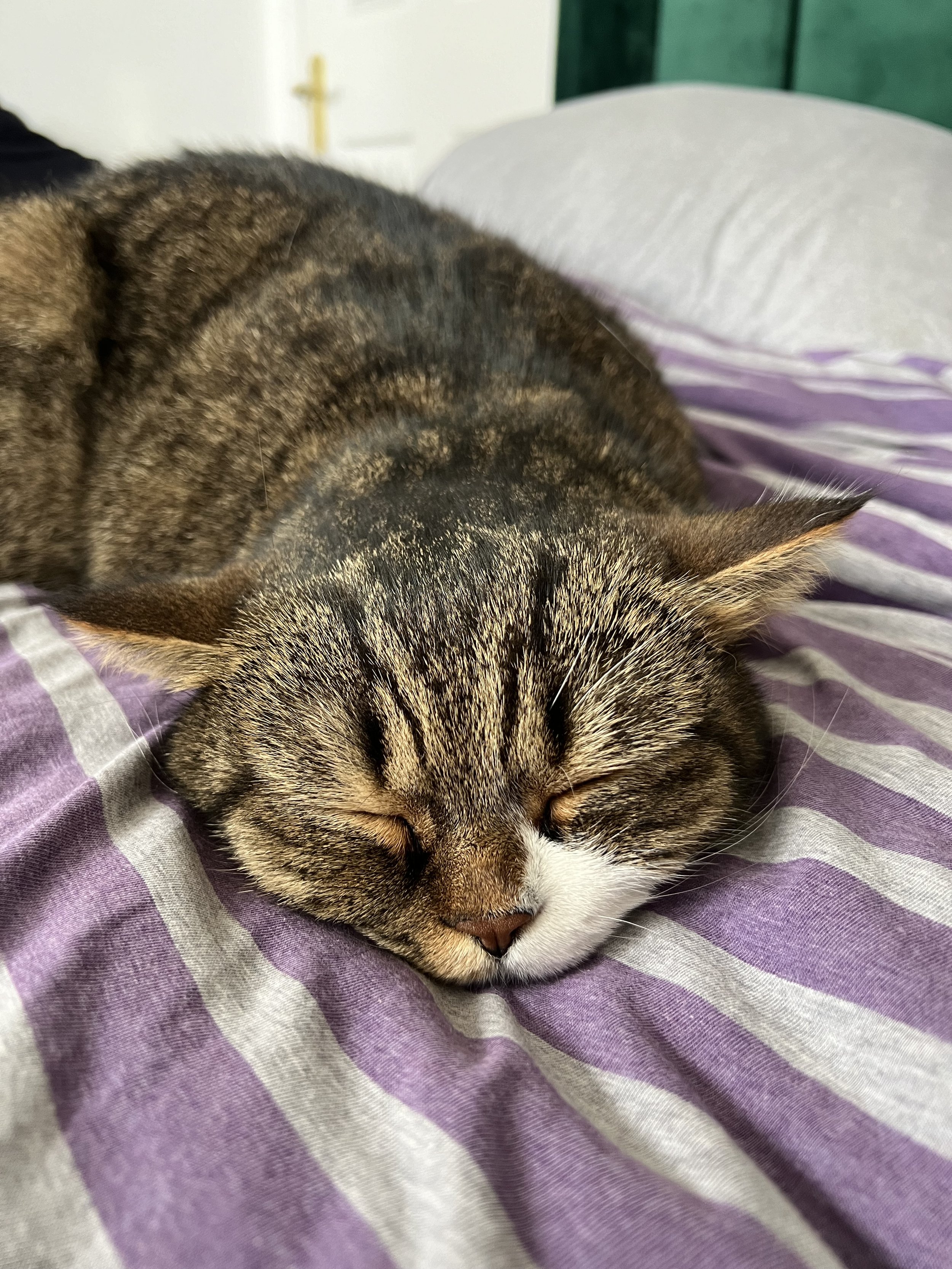
If only I could add some of the purr audio to this image of Spuddie
Although dogs often get most of the attention in pet therapy research, cats—and other companion animals—are not to be overlooked. All of these animals can offer companionship and emotional support, but cats bring something especially interesting to the table: the purr.
What Does the Research Tell Us About Pets and Mental Health?
There is solid evidence that spending time with pets can influence our stress response and emotional state. Several studies have shown that interacting with animals can:
• Reduce cortisol levels, the hormone associated with stress. Interactions with pets have been linked to lower cortisol and reduced anxiety.
• Boost oxytocin, sometimes called the bonding hormone. This hormone promotes feelings of calm and connection and increases with affectionate contact like stroking a pet.
• Lower heart rate and blood pressure. Research has found that pet owners tend to have lower resting heart rates and blood pressure, and recover from stress more quickly.
In some large observational studies, people who own pets also show a lower risk of death from cardiovascular disease compared with those who do not own pets. While this does not prove a direct cause-and-effect relationship, it strengthens the idea that pet companionship may be linked to long-term heart benefits.
Pet interaction can also improve feelings of social support and decrease loneliness. In systematic reviews of wellbeing research, some studies find that attachment to a pet is associated with positive mental health outcomes for both cats and dogs.
What Makes Cats Unique? The Science of the Purr
Cats typically purr at frequencies between 25 and 150 Hertz. These low vibrations fall within a range that has been associated with relaxation in animals and humans. Although the purr itself is not a medical therapy, this vibration may contribute to the soothing sensation many people experience when close to their cat.
The calming effect of a cat purring is also enhanced by touch. Stroking a cat’s fur releases oxytocin and helps reduce cortisol, which can promote a relaxed state. There is also early research exploring how low-frequency vibrations like those created by a purring cat might influence pain perception. This area is still developing, and while the evidence isn’t strong enough to use purring as a medical intervention, it does provide an interesting avenue for further study.
Why All Pets Can Make a Difference
While cats have the unique advantage of the purr, many other animals also play an important role in supporting wellbeing. The research on pet companionship is wide ranging and includes dogs, small mammals, birds and even fish. Across these studies there are clear patterns that highlight how different species can help us feel calmer, more connected and more supported in daily life.
Dogs are the most extensively studied animals in the field of pet therapy. Interacting with a dog has been shown to reduce cortisol and increase oxytocin and dopamine, which are chemicals linked with bonding, pleasure and emotional regulation. Research from the American Heart Association has found that dog owners tend to have better cardiovascular profiles, partly because dog walking increases physical activity and creates more regular social contact through casual conversations in parks and neighbourhoods. These behavioural changes can contribute to long-term heart health as well as day-to-day improvements in mood.
The mental health impact extends further. Studies published in peer-reviewed journals during the COVID 19 pandemic found that people who spent time with their pets reported lower levels of loneliness and better emotional stability compared with those who did not own pets. Researchers noted that pets appeared to provide a consistent source of comfort and routine during a time when social networks and daily structures were disrupted. These findings came from large international surveys and were later supported by controlled studies looking at stress markers and self-reported wellbeing.
Other companion animals can provide similar benefits. Small mammals such as rabbits, guinea pigs and hamsters are often used in animal-assisted interventions for children because they encourage gentle touch and help build confidence. Birds can offer companionship through sound and routine, and fish tanks have been shown in some studies to reduce anxiety in clinical waiting rooms. These effects are not as well researched as those seen with cats and dogs, but the early evidence suggests that the presence of an animal, regardless of species, can support emotional regulation in many settings.
The type of benefit often depends on the nature of the animal. Walking a dog increases daily movement, reduces sedentary time and brings regular social interactions, all of which support physical and mental health. The quiet, predictable company of a cat may be especially comforting for people who spend a lot of time at home or who prefer a calmer environment. Even watching fish can have a gentle meditative effect, lowering heart rate and creating a sense of stillness in otherwise busy environments.
Although the purr deserves its own scientific spotlight, the broader field of pet companionship makes one thing clear. Many animals can help us feel calmer, more grounded and better supported, and these benefits appear across different ages, cultures and life circumstances.
Why This Matters in Winter
Winter can be a challenging season for many people. Shorter days, colder weather, and a faster pace of life can increase stress and leave us feeling tense or depleted. Creating small, calming rituals can help regulate our nervous systems and improve mood.
For some, this could be a daily walk, meditation or a warm drink by the window. For pet owners, it might be simply sitting quietly with their animal. Even a few minutes of stillness with a pet can shift attention away from stress and toward something peaceful and predictable.
Spuddie’s Contribution to Winter Wellbeing
At home, our chunky cat Spuddie is a master of calm. He spends much of his day demonstrating the benefits of rest, warmth and the occasional purr. Spuddie reminds us that well-being does not always come from big changes. Often, it comes from small, consistent moments of comfort.
A Gentle (Furry) Takeaway
Pets are not a replacement for clinical treatment, but their presence can offer emotional support and create space for small, restorative pauses in our day. Cats bring something uniquely comforting through their purr, and dogs and other pets also contribute to our emotional and physical health in meaningful ways.
If you have a pet at home, try slowing down for a moment and noticing how your body responds when you sit with them. And if that pet happens to be a cat, you may find that the soft vibration of a purr helps you unwind more than you expect.