Scorching Weekend Ahead - Here's Why You're Probably Wearing Your SPF All Wrong
The forecast looks glorious. Genuinely, properly glorious. And I want you to enjoy every second of it. But before you head out, can we talk about sunscreen? Because most people think they are doing it right, and most people are not quite there.
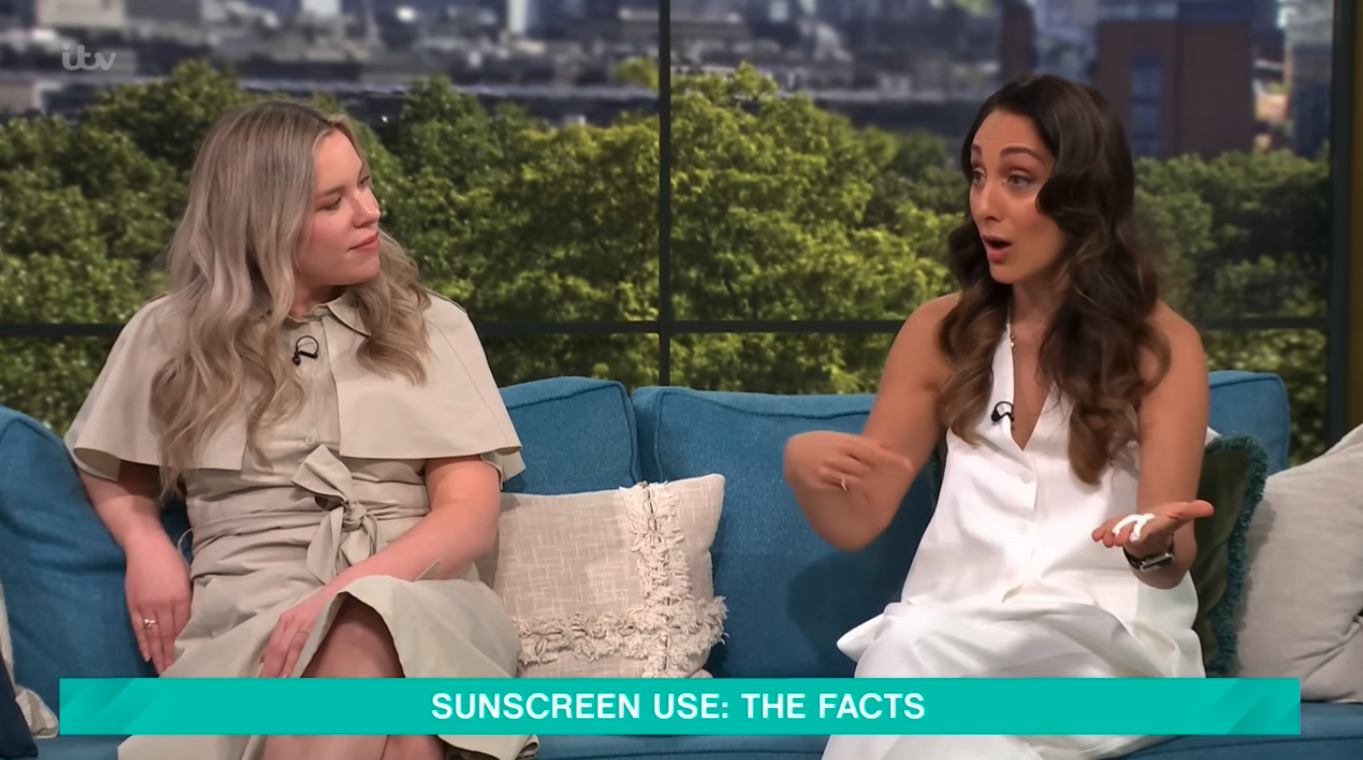
This is not about guilt. It is about giving you the information you actually need so that this weekend, and every sunny day after it, you are properly protected.
SPF does not mean what most people think it means
SPF stands for sun protection factor. The number on the bottle comes from a calculation: if unprotected skin burns after 10 minutes in the sun, SPF 30 theoretically gives you 300 minutes of protection.
The operative word is theoretically. That figure comes from ideal lab conditions. It does not account for sweating, swimming, rubbing your face, or the fact that most of us apply a fraction of the recommended amount. Treat it as a guide, not a guarantee, and build your habits around that.
You are almost certainly not using enough
This is the one that tends to stop people in their tracks. For full-body coverage, you need six to eight teaspoons of sunscreen. Most people use nowhere near that.
Here is a practical way to measure it. Press your index and middle fingers together and squeeze a strip of sunscreen along both. That is roughly one teaspoon. You need one teaspoon per body zone: face and neck, each arm, each leg, the torso, and the back.
Set a timer. Reapply every two hours, and sooner if you have been in the water, working up a sweat, or towelling off.
UVA goes through windows, and this is important
There are two types of UV rays worth knowing about. UVB is what causes sunburn and redness. UVA goes deeper into the skin, drives long-term damage and premature ageing, and here is the part people often miss: it goes straight through glass.
That means driving this weekend counts as sun exposure. Sitting by a sunny window at home counts. Working near a window in the office counts. Daily SPF is not just something you reach for on beach days. It is genuinely a daily habit, all year round, wherever you are.
What to actually look for on the bottle
SPF 30 or above is the minimum worth going for. But the SPF number is only half the picture. You also need to check for a UVA protection rating, which appears either as a star rating (four or five stars) or a circle with the letters UVA inside it. This tells you the product is working against both types of UV, not just UVB.
And please check the expiry date. It usually appears as a small open-pot symbol with a number and the letter M, indicating months. The moment you open a new bottle, write the date on it. Sunscreen degrades over time, and a product that is past its best will not protect you the way you think it is.
A quick word on cost
Sunscreen is currently taxed as a cosmetic product in the UK, meaning 20p in every pound you spend on sun protection goes to VAT. For families trying to do the right thing on a budget, that is a real and frustrating barrier. There is a growing campaign pushing for that to change, and rightly so. Search 'Axe the SPF Tax' if you want to add your name to the petition.
Go and enjoy the sunshine
Wear SPF 30 or above. Check the UVA rating. Use more than you think you need. Reapply. And if you are driving or sitting near a window, please do not assume you are covered.
The sun this weekend is going to be wonderful. With a little preparation, you can enjoy all of it.